

This book examines the strategic transformation of Palangka Raya into a smart regional hub supporting the development of Ibu Kota Nusantara through the framework of infrastructure connectivity, smart city development, and spatial justice. It argues that the relocation of Indonesia’s national capital is not merely an administrative shift but a large-scale socio-spatial transformation with profound economic, cultural, ecological, and political implications for Kalimantan. Focusing on the proposed 407-kilometer Palangka Raya–Simpang Sotek toll corridor, the study explores how infrastructure can function simultaneously as a driver of regional integration, economic growth, and digital connectivity while also producing risks of exclusion, ecological degradation, and social inequality.
The book employs an interdisciplinary theoretical framework synthesizing Manuel Castells’s Network Society, Henri Lefebvre’s Production of Space, David Harvey’s Political Economy of Urbanization, and Edward Soja’s Spatial Justice. Through this framework, infrastructure is understood not merely as a physical asset but as a socioeconomic-digital assemblage shaping flows of capital, information, power, and social relations. The study critically evaluates the opportunities and challenges arising from the integration of Central Kalimantan into the emerging IKN development network, particularly concerning Dayak indigenous communities, land acquisition, environmental sustainability, and equitable access to development benefits.
Methodologically, the book adopts a critical interpretive approach based on feasibility studies, regional planning documents, government regulations, and urban theory literature. It proposes a long-term smart city strategy for Palangka Raya (2025–2045) centered on multimodal connectivity, digital governance, intelligent transportation systems, integrated economic zones, and a biocultural development model rooted in Dayak ecological wisdom. The study concludes
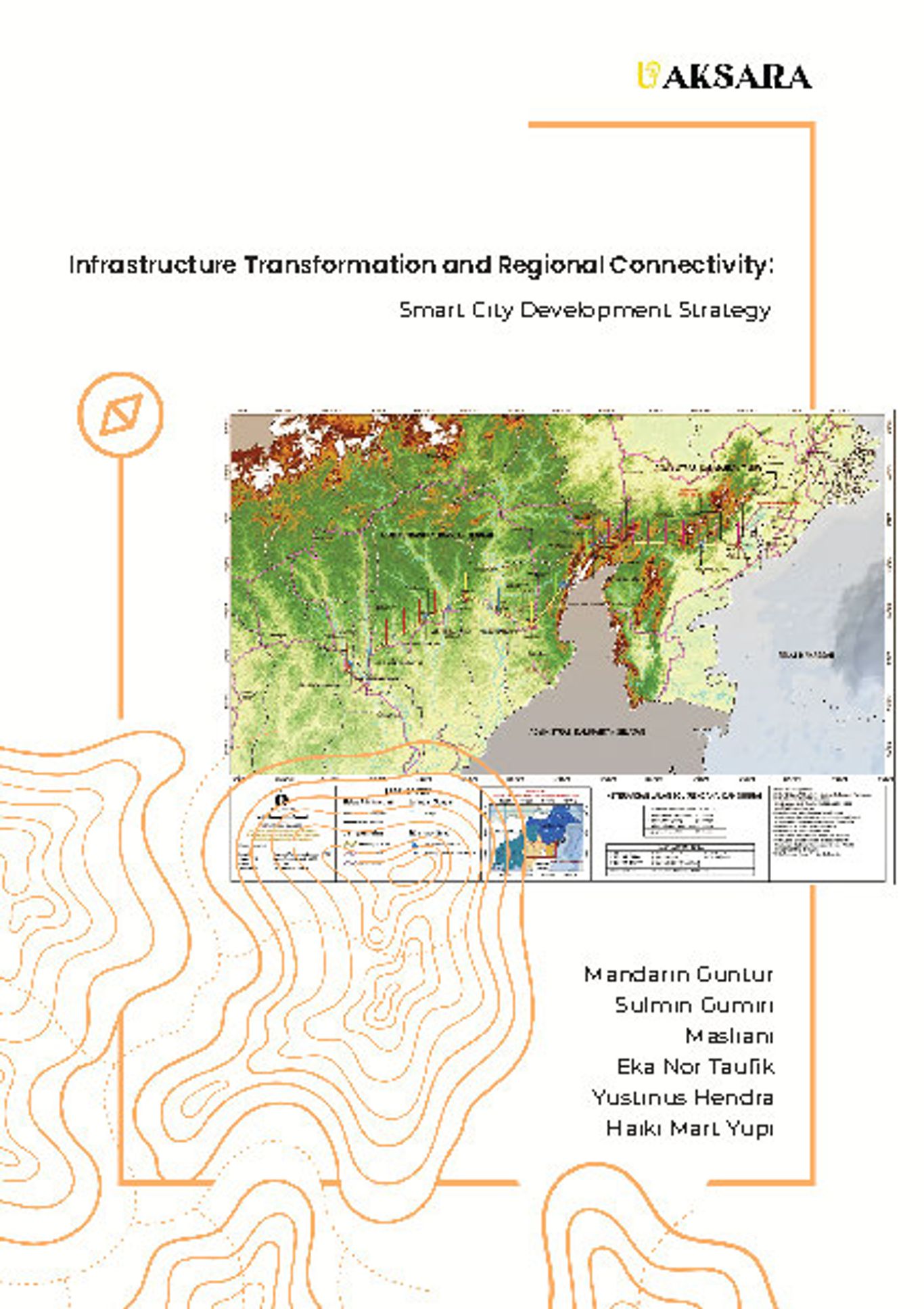
Infrastructure Transformation and Regional Connectivity: Smart City Development Strategy
UI Aksara Official
Pendidikan